Three years after Justice Minister Yariv Levin announced the judicial coup, Israel has transformed from a flawed democracy into a state with a competitive–authoritarian regime.
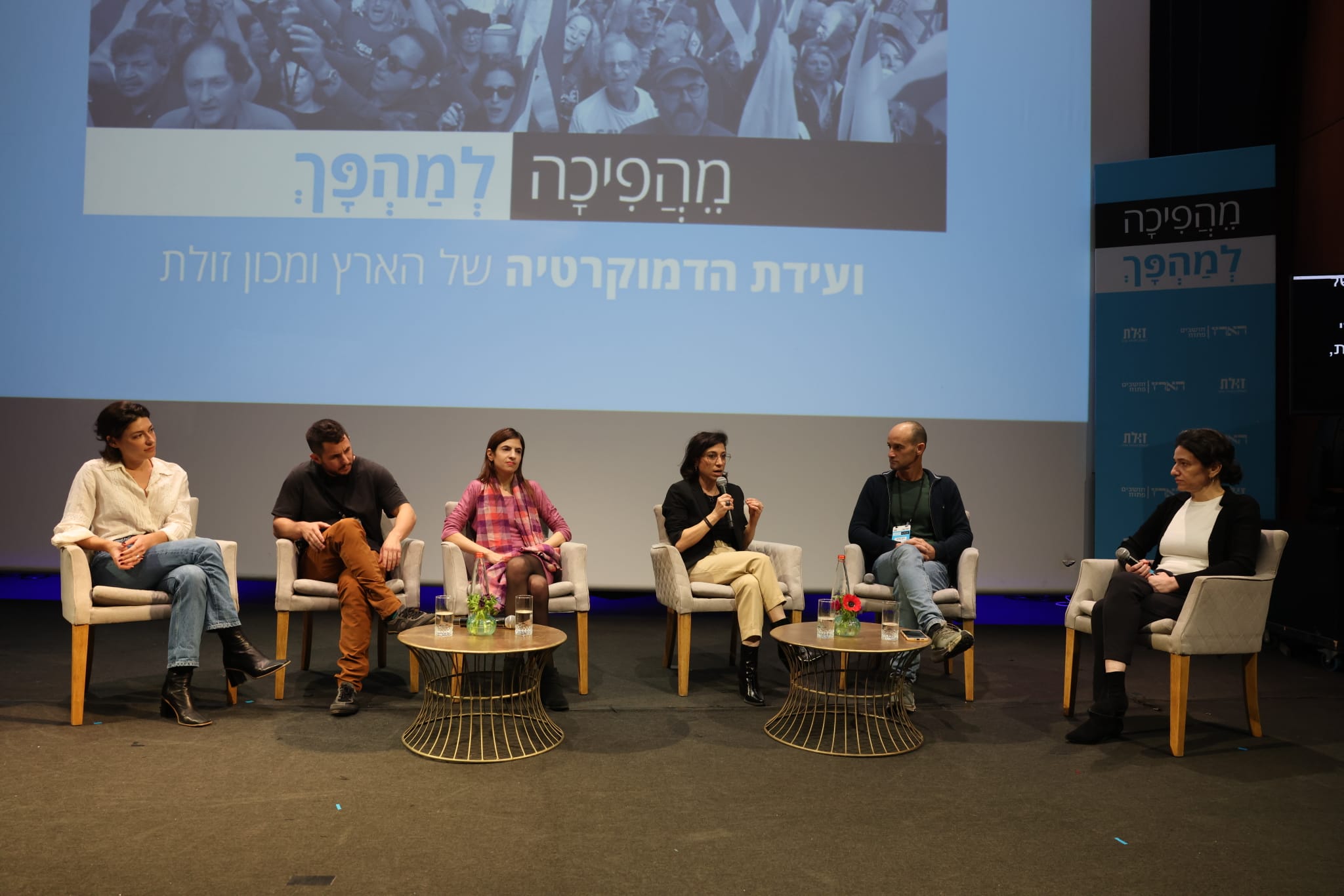
At the Democracy Conference we held with Haaretz newspaper on January 23, we examined the implications of the government’s destructive policies on Israeli society and explored pathways back to a democratic track, together with a range of political leaders, experts, and leading activists from the civil society.
Zehava Galon, President of Zulat said: “We are entering an election year under a regime that is not democratic, with weakened gatekeepers. These elections will determine whether we slide into full dictatorship, or return to a functioning democratic regime.”
Aluf Benn, Editor of Haaretz said: “The coup was not only intended to give more power to Netanyahu and his Kahanist and ultra-Orthodox partners, or to free him from his corruption trial. It’s not all personal. The Israeli right has a much more important goal, which it has been promoting tirelessly since 1967: annexation of the occupied territories, expulsion of the Palestinians or some of them, and suppression of those who remain.”
Shira Ben Sasson, CEO of the New Israel Fund said: “Against the enormous power of the government, we stand – the Civil society. Hundreds of thousands of Israelis, determined to fight for democracy. Without civil society, Israel would have already fallen.”
Yair Golan, Leader of the Democrats Party said: “I am today the only leader saying that sitting (in coalition) with the Arab parties is a blessed thing. But the majority of the Israeli public also agrees that sitting with Mansour Abbas in the Government of Change was a good partnership. We need both political logic and simple arithmetic.”
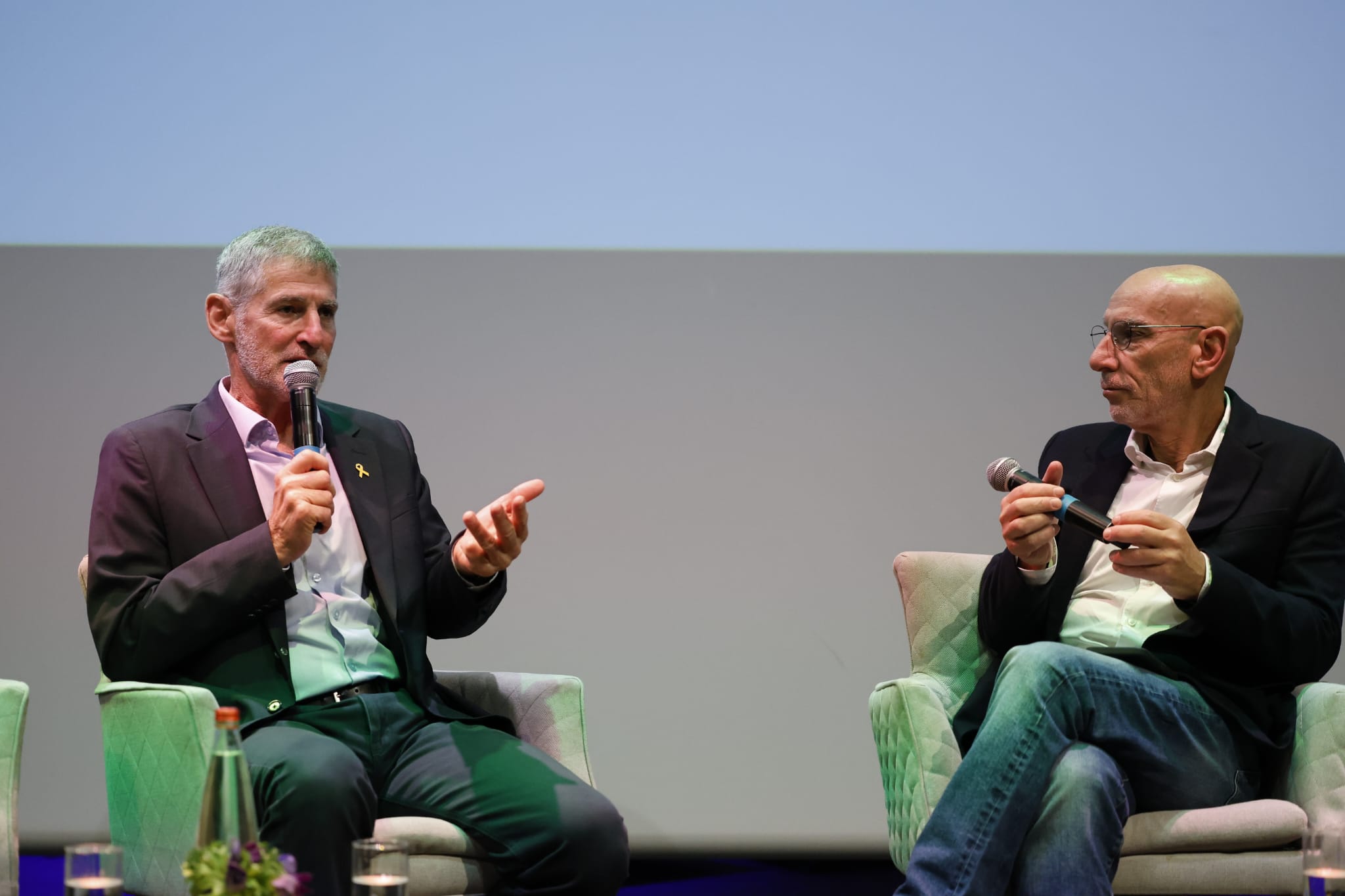
MK Ayman Odeh, Chairman of Hadash Party: “We must do everything so that the Netanyahu-Ben Gvir government is replaced. This is an existential matter. There are disputes between us, but with all due respect, the big disagreement is not between me and Mansour Abbas but between us and this government.”
Dorit Beinish, Former President of the Supreme Court: “When they say that public trust in the courts has declined, we must remember that for years the government has been working to lower the public trust in the courts. Like someone who murdered his parents and cried that he’s an orphan. Now they say that a state commission of inquiry cannot be appointed because there is no trust in the president of the Supreme Court and that the Supreme Court itself should be investigated as well.”

Dr. Michal Avron Yaniv, Steering Committee of Zulat: “We are in the midst of a historic global wave and we are part of it. Orbán in Hungary changed the court and is obsessive about dealing with the media. Erdoğan put 200 journalists on trial, 60 of them are in prison today. In Trump’s America we saw the crushing of the civil service and the placement of his loyalists.”
Itai Mack, Legislative and Human Rights Advisor, Zulat: “What happened in 2023 is the drip of legislation became a tsunami. We could no longer look every morning, like shareholders, to see if our stock went down or up and if the fortress still stands or fell. The fortress still stands, but this causes the public to think everything is fine. We are no longer in a flawed democracy; we are in a flawed authoritarian regime.”
Brigadier General (Res.) Noam Tibon, Yesh Atid: “On October 8, after I saw this failure with my own eyes, I said that everyone who was involved in this failure, including the government of Israel led by Netanyahu, must go. We must have a state commission of inquiry.”
MK Ahmad Tibi, Chairman of Ta’al : “Public pressure brought the heads of the four (Arab) partyleaders to sign a declaration for a joint (parliament) runyesterday. There is now euphoria thanks to this move because people want to change the difficult reality. The most important tool for removing this government is a joint list of 15-17 mandates and this will send the Netanyahu-Ben Gvir-Smotrich government home.”
Adv. Michael Sfard: “The High Court has a huge hump. The biggest successful lie in Israeli politics is that the High Court is a leftist pro-Palestinian institution that protects their rights. For me, the High Court is the godfather of the settlement movement. With Aharon ‘everything is justiciable’ Barak there was one thing that is not justiciable and that is the legality of the settlement movement.”
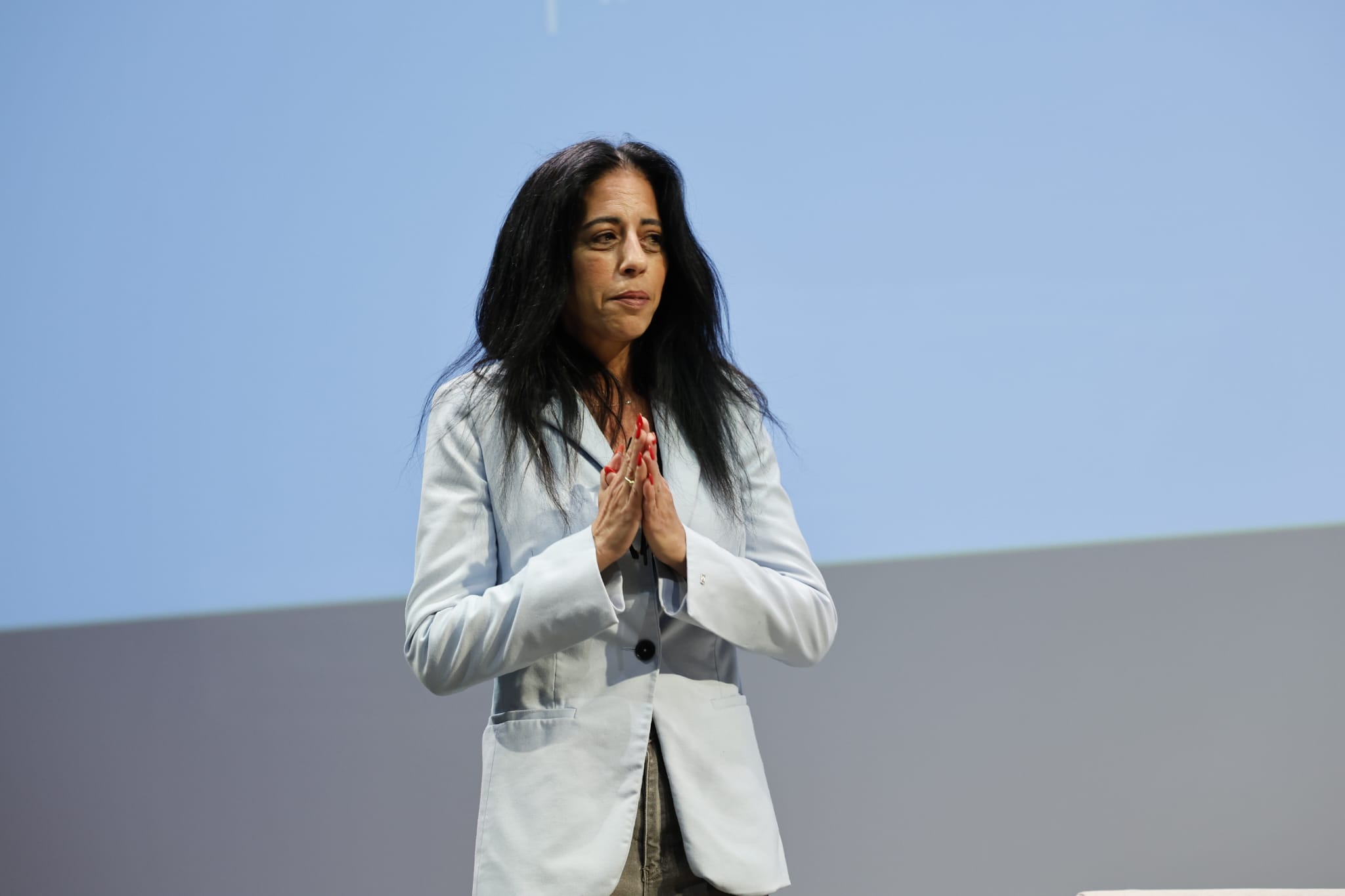
Einav Zangauker said: “The disconnect and alienation that our politicians have is inconceivable and this must not be allowed to continue. When I issued a call to the people of Israel to come out for Matan and the other hostages they showed up, and what I can do for the Israeli public in return is to enter politics. Everyone talks to me, including the Likud. But I’m done with Benjamin Netanyahu and with the party he leads and you can’t go back from that.”
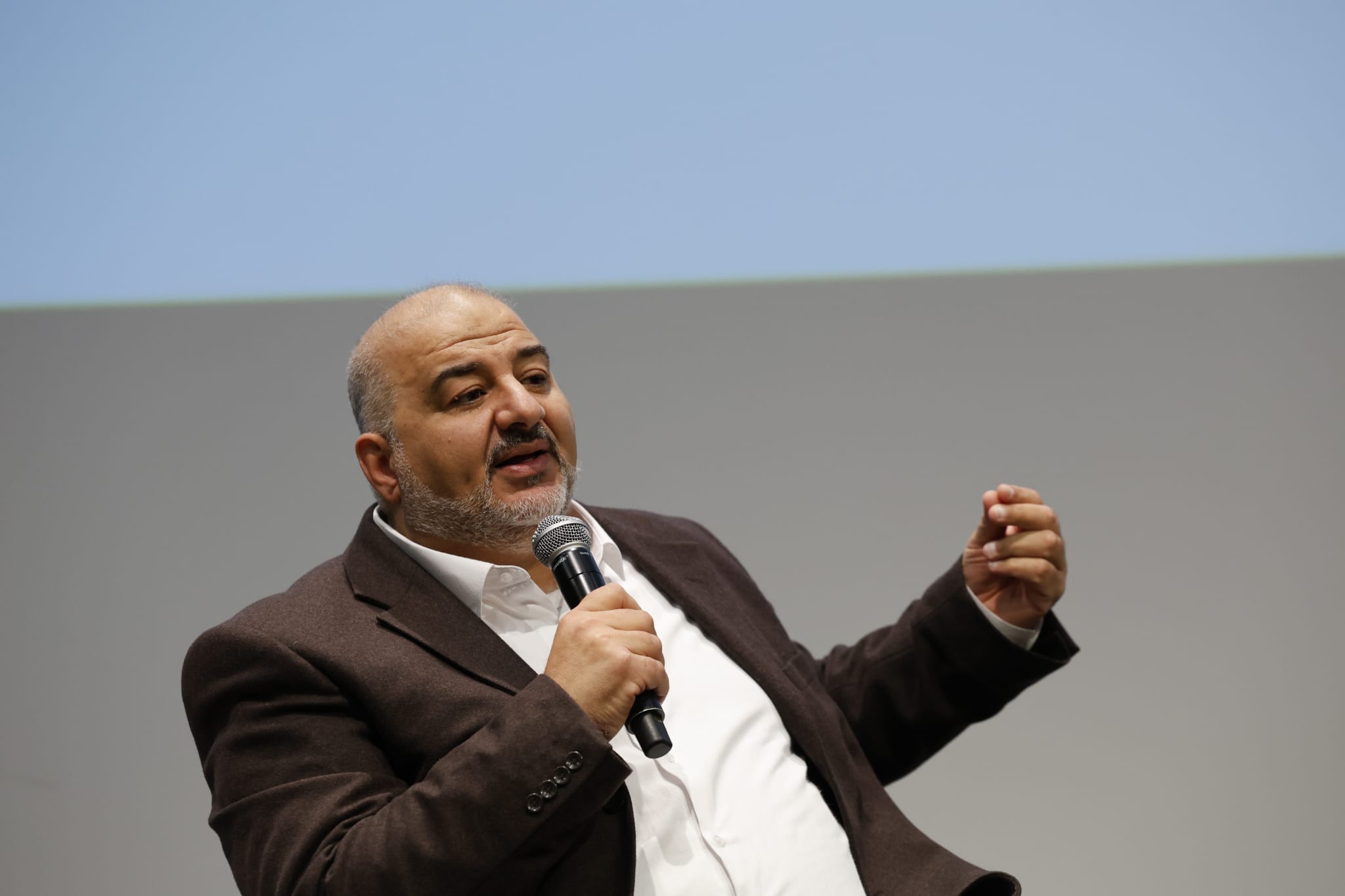
MK Dr. Mansour Abbas said: “We heard from the residents of Sakhnin that if the government doesn’t respond to their demands, the Arab parties must do so. The Joint List can be part of the solution only if it follows Ra’am’s path of partnership and walking together. I need to lead a notion of transition from politics of representation to partnership and assuming responsibility.”
Einat Ovadia, CEO of Zulat said: “We need to strengthen the struggle for free media in Israel. We don’t always see the technocracy behind the clauses aimed at harming the media. We don’t have a communications minister; we have a propaganda minister of the State of Israel. If the media falls, democracy falls.”
Adv. Nava Rozilio, Protest Activist said: “It’s important not to call the car blockers right-wing activists, that’s an insult to the right. They are regime thugs, and clearly this shouldn’t happen in a democratic state. This is part of the suppression and part of the judicial coup.”
Reut Inbar, Independent Journalist, said: “We need to tear down the illusion that only you hold a certain position. If more people feel that their position is legitimate and can be stood behind, there is value to that. We saw this at Kaplan, hype was created around the protests, it became something people wanted to come to. This works even when preaching to the choir, because the public that is with us doesn’t always take a public position.”
Captain (Res.) Tom Pinchassi, The Reservists’ Struggle, said: “There are people who ask what the left has to do with the enlistment issue. There are two answers to this. The first is that the security situation does not allow the dismantling of the army, and my position is also that if we are not part of the people’s army, we cannot be part of a governing alternative. This is a political game, if we want to lead a transformation we need to be there.”
Lt. Col. Ron Scherf, Brothers and Sisters in Arms, said: “We were the first to enlist on October 7, both for reserves and for civilian aid. At 7:15 that morning we already issued notices, on the 10th there was a forward command post in Beit Kama and on the 11th, there was a command post at Expo. We will act like on October 7 to save the state. We must have elections and there must be fairness. Second, we must ensure that every elected government anchors democracy from the start, otherwise all the struggle will have been in vain.”ֿ


