Joint Conference of Zulat and the Female Directors Forum of the Directors Union

How do we overcome structural barriers that prevent women from participating in the public/political arena? This question was discussed by experts from various fields and former Knesset members on July 10, 2025, at a joint conference of Zulat and the Female Directors Forum of the Directors Union. As part of the conference, The Directors forum launched a new forum, for Promoting Political Leadership, headed by former Knesset member Michal Rozin.

They also discussed the question: What needs to be done to have more women in the public political arena? Although we speak in egalitarian rhetoric, when we see the small number of women in decision-making positions, we understand that the few who made it to power positions are the exception – those who broke the glass ceiling.

So when asked why there aren’t more women in the public/political arena, the answer is that it’s not only women’s responsibility to integrate into the public space, it’s also the responsibility of the political and cultural, media and social system, which must act to identify all those mechanisms and barriers that prevent the advancement of women and equality.

Our aspiration for 50 percent representation in public and political systems is part of a broad worldview of justice and equality.

.
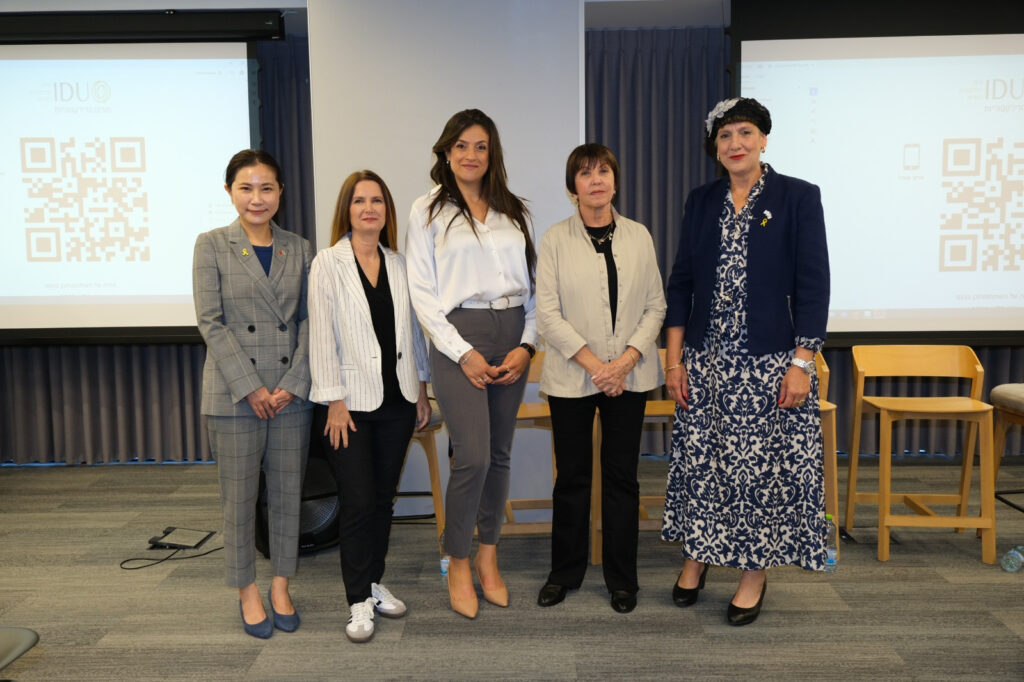
Ambassador Avi Ya-Ping Li, Taiwan’s representative in Israel, spoke of their impressive struggle to promote women in the public arena, which culminated in the last elections, when 42% of parliament members elected were women.

Zulat President Zahava Gal-On spoke about collaboration of female Knesset members from across the political spectrum, to promote laws committed to advancing women’s interests.

Zulat CEO Einat Ovadia said that women are almost absent from decision-making tables and the more women who walk in the corridors of power, the more this will have a domino effect of integrating women in the public, cultural and business sectors.
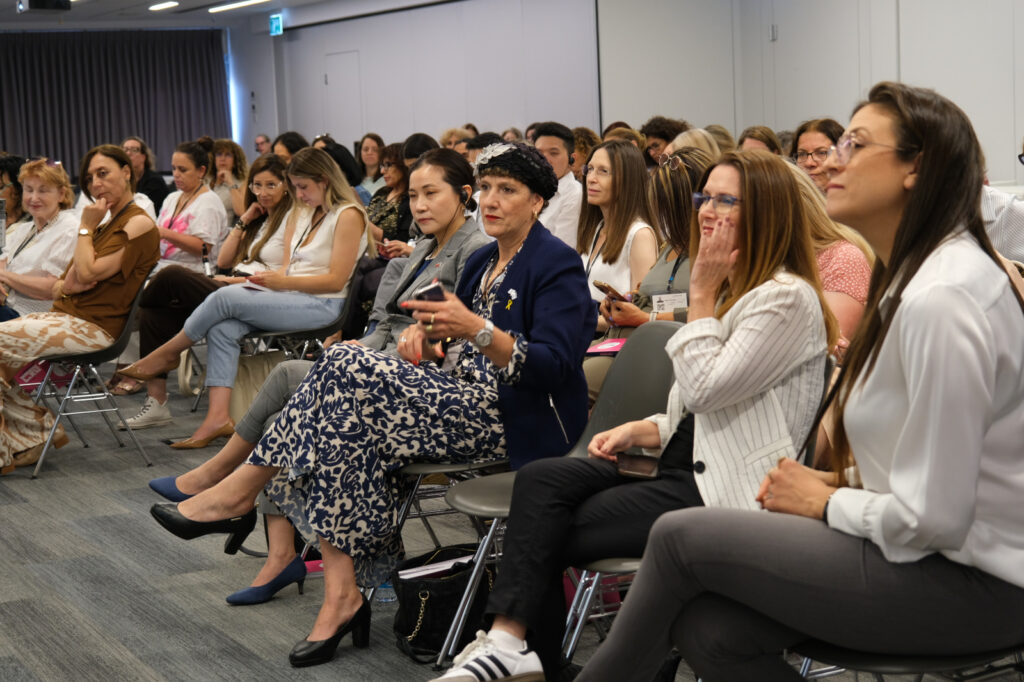
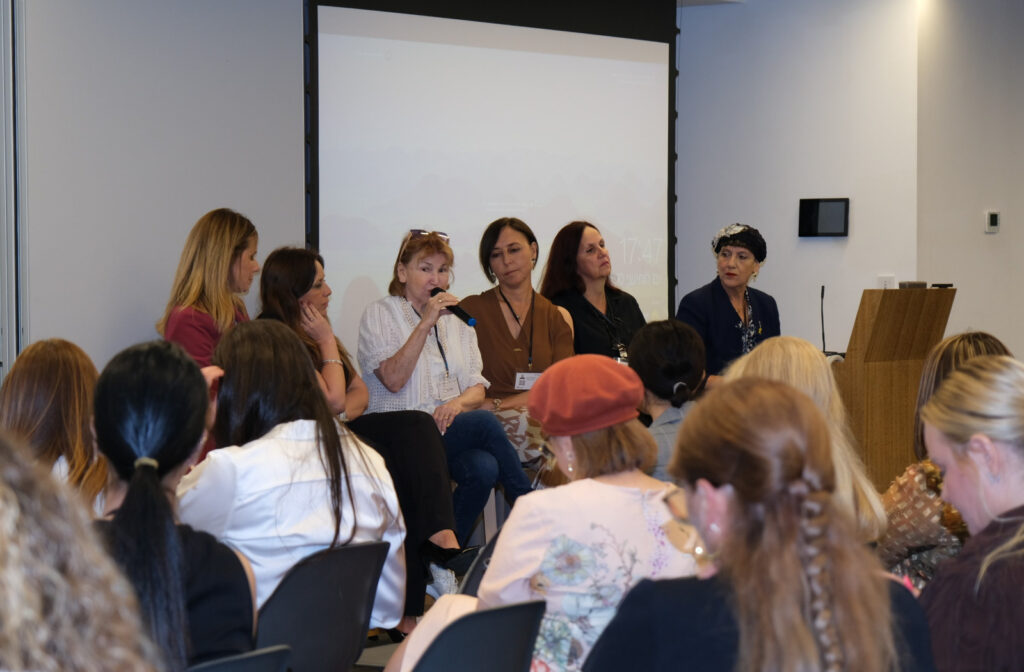


Photos: Karin Gov

Clipboard01.jpg

Dr. Maha Sabbah Karkabi


Senior Lecturer in the Department of Sociology and Anthropology, Ben-Gurion University of the Negev. She holds a Ph.D. in Sociology from Tel Aviv University (2015), a postdoctoral fellowship at the Center for Gender Studies, SOAS, University of London (2015-2016), a postdoctoral fellowship in the Department of Sociology at Tel Aviv University (2016-2017), and a postdoctoral fellowship Ph.D. at the Humphrey Institute for Social Research, Ben-Gurion University of the Negev (2018-2020).
Dr. Maha Karbahi’s areas of interest focus on the connection between social change, family behavior, and gender inequality in societies in the process of change and specifically in Palestinian Arab society in Israel. Her research draws attention to the study of family life and employment, using a combined “ethnic lens” and “gender lens” and paying attention to the perspective of Palestinian Arab women, a group characterized by intersections between multiple marginal locations, which over the years has remained hidden from the research eye. Dr. Karkabi-Sabah’s research is published in professional journals and chapters in scientific books that are considered pioneers in family research, work, and gender equality.

פרופסור-אמריטה.jpg
 

Prof. Frances Raday

Professor Emeritus in the Lieberman Chair in Labor Law, in the Faculty of Law at the Hebrew University and serves as a full professor in the College of Management’s academic track, where she also serves as chair of the graduate program and as honorary president of the Concord Center for International Law Absorption. Radai was a member of a working group of the UN Human Rights Council on discrimination against women. In addition, she is a prominent and feminist human rights activist.

WhatsApp-Image-2020-05-17-at-20.39.21

Dr. Rawia Aburabia 

Faculty member of Sapir Academic College’s School of Law, received her PhD from the Hebrew University of Jerusalem. Her research deals with the interface between law, gender, minorities, and human rights. Has published in leading journals on the subject of the matrimonial laws pertaining to Muslim women in Israel. Her book Under the Law, Outside Justice: Polygamy, Gendered Citizenship, and Colonialism in Israeli Law is expected to be published as part of the Gender Series of Kibbutz Meuhad Publishing House.

Dr. Aburabia has extensive experience in international human rights and public law. She has worked as a jurist for the Association for Civil Right and has been invited as a specialist to address such international forums as the United Nations and the European Parliament on the subject of indigenous communities and minority rights. She has interned with Human Rights Watch in Washington DC, and has been a member of the executive board of Amnesty International. In 2018, she was selected by the magazine Globes as one of the 40 most promising young persons in Israel under the age of 40.


18076724_10154573442149677_1211984367607245921_o-1

Ron Kessler

With over two decades of experience in the field of digital content, Ron has participated in numerous political and social campaigns. He helped run the digital activity of senior public officials, and worked in various NGOs. Ron is a fundamentally optimistic man, who believes that Israel can be changed and so can people. Lives in Tel Aviv.